
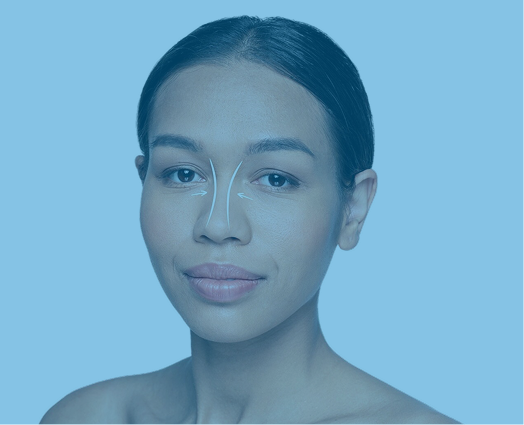
Find answers to the most common questions about rhinoplasty and nasal surgery at Dr. Rotenberg’s London, Ontario practice. Whether you’re exploring a cosmetic nose job, a functional breathing correction, or a combination of both, the information below is designed to help you make a confident, informed decision.
Rhinoplasty, commonly referred to as a nose job, is one of the most intricate cosmetic surgical procedures performed in Ontario. Modifying the nasal structure requires a delicate blend of artistic vision and medical precision, meaning no two surgical plans are identical. For patients considering this procedure in London, Ontario or the surrounding Southwestern Ontario region, understanding the financial investment is an important first step.
For a standard, elective cosmetic rhinoplasty, patients in London, Ontario can generally expect a price range between $9,000 and $16,000+ CAD. The final amount fluctuates based on the complexity of the clinical variables involved and the specific techniques required.
The financial scope changes significantly depending on whether surgery is being performed for the first time or to correct a previous procedure. A primary rhinoplasty typically falls within the standard $9,000 to $16,000 range. Revision or secondary rhinoplasties are considerably more complex — they require navigating existing scar tissue and often necessitate harvesting cartilage grafts from the ear or rib — which is why revision surgeries routinely cost anywhere from $14,000 to upwards of $25,500. Because every nose is anatomically unique, Dr. Rotenberg provides each patient with a personalized, formal quote prior to surgery that outlines their exact costs.
See our full Rhinoplasty Cost in London, Ontario article for a detailed pricing breakdown.
Understanding OHIP eligibility is an important early step for patients navigating nasal surgery in London, Ontario. The Ontario Health Insurance Plan applies strict guidelines, drawing a clear line between aesthetic changes and functional necessity.
OHIP covers functional nasal surgery but strictly excludes cosmetic alterations. Because breathing is recognized as an essential bodily function, if an ENT surgeon like Dr. Rotenberg determines that a nasal passage is structurally obstructed, the provincial plan will cover the specific surgical components required to restore proper airflow. Medically necessary interventions covered by OHIP include:
Many patients wish to correct a functional breathing issue while simultaneously refining the external shape of their nose, a combined procedure known as a septorhinoplasty. In these cases, the financial breakdown splits into two parts. The province pays a fixed fee to cover the medically necessary portion, such as the septoplasty or turbinate reduction. The patient remains responsible for the cosmetic portion of the surgeon’s fee, plus private facility and anesthesia costs associated with the additional operating room time.
If breathing is the primary concern, the recommended first step is to see a family doctor and request a referral to a local ENT to explore potential OHIP coverage. For patients whose goals include aesthetic refinement, booking a consultation with Dr. Rotenberg in London, Ontario is the best way to understand all available options.
When receiving a formal quote from Dr. Rotenberg’s London, Ontario clinic, it is important to clarify whether the figure provided is an all-inclusive package or a singular line item.
The surgeon’s fee compensates the surgeon for their time, medical expertise, operating room execution, and professional liability insurance. It reflects years of specialized training, board certifications, and the technical difficulty of the specific nasal surgery planned.
In many clinics, the total quote is bundled for transparency. A comprehensive cosmetic quote typically includes:
Rhinoplasty recovery is a gradual process. The complete healing timeline spans at least a full year, though the most demanding phase is concentrated within the first two months.
During the first week, the nose is supported by an external splint, and internal splints or soft packing may be placed inside the nostrils to stabilize the septum. Around day seven, patients return to the clinic to have the external splint, skin sutures, and internal packing removed. Most patients feel a rapid return of physical energy at this point. Between weeks two and six, while patients feel largely normal, the structural bones and cartilage require roughly six weeks to heal securely — heavy lifting and strenuous exercise must be strictly avoided during this window.
Swelling and bruising typically peak between 48 and 72 hours after the procedure, often shifting down around the eyes and cheeks. This initial wave begins to fade noticeably by the end of the second week. Approximately 70% to 80% of visible swelling subsides within the first month, with the remaining 20% clearing at a much slower rate over the course of the year. Residual swelling — particularly around the nasal tip and areas where bone was adjusted — can fluctuate daily and may look more pronounced in the morning. Full resolution of deep-tissue swelling, and the emergence of the final nasal contours, takes a complete 12 months.
Dr. Rotenberg reviews this healing timeline with every patient at his London, Ontario clinic, so your expectations are grounded in what’s realistic for your specific case.
Planning the return to professional life is a key component of surgical preparation. The timeline depends on the physical demands of the role and the patient’s personal comfort level with residual swelling and bruising.
For patients in remote or desk-based office roles, returning to work is typically feasible within 10 to 14 days post-surgery. By this point, post-operative fatigue has cleared, the splint has been removed, and concentration is restored.
For public-facing roles requiring extensive face-to-face interaction, a full two weeks off is often preferred — giving visible bruising time to fade and become easily masked with light cosmetics. For roles involving heavy lifting, intense physical exertion, or environments with a high risk of facial impact, Dr. Rotenberg will generally advise waiting three to four weeks before returning to full duty, to prevent elevated blood pressure from triggering a nosebleed or disrupting internal structural healing.
Protecting the newly shaped bone and cartilage is critical to a successful long-term result. Whether glasses can be worn immediately after the procedure depends entirely on the specific modifications performed.
If surgery was confined strictly to the internal septum (septoplasty) or the soft tissue of the nasal tip without altering the nasal bones, lightweight frames may be approved relatively early in recovery. However, if osteotomies were performed — meaning the nasal bones were intentionally cut or repositioned to narrow the bridge or smooth a hump — resting glasses directly on the nose is strictly prohibited for four to six weeks. The continuous weight of plastic or metal frames on healing nasal bones can cause structural shifting, depressions, or permanent contour irregularities.
For patients who depend on corrective lenses, contact lenses are the safest and most practical alternative during the initial month. For those who cannot wear contacts, surgeon-approved options include using medical tape to anchor the bridge of the glasses to the forehead so they suspend above the nose, or investing in specialized post-rhinoplasty eyeglass supports that transfer the weight of the frames to the cheekbones rather than the nasal bridge.
This is one of the practical details Dr. Rotenberg walks through during your London, Ontario consultation, so you know exactly what to expect during recovery.
From a clinical standpoint, Dr. Rotenberg will generally not perform the surgery until a patient has reached complete nasal maturity — the point at which the facial skeleton, nasal bones, and cartilage have fully grown and settled into their final adult proportions. Performing the procedure while the facial skeleton is still developing risks subsequent skeletal growth warping the surgical changes, potentially compromising both the cosmetic outcome and the internal breathing passages. Generally, nasal growth is complete around age 15 to 16 for females and age 17 to 18 for males. Beyond physical maturity, emotional readiness and psychological maturity are carefully evaluated — younger patients must demonstrate a clear understanding of the permanent nature of the procedure and hold realistic expectations. There is no upper age limit for rhinoplasty, provided the patient is in good general health and medically cleared for surgery.
Preparing for rhinoplasty in London, Ontario involves several key lifestyle adjustments in the weeks leading up to the operating date:
The structural difference between an open and a closed rhinoplasty comes down to a single, strategically placed incision. In an open rhinoplasty, the surgeon creates a small incision across the columella — the narrow strip of tissue separating the nostrils — in addition to internal incisions inside the nose, allowing the nasal skin to be gently lifted back for full, direct visualization of the framework. This open approach is typically favoured for complex reconstructions, severe septal deviations, tip refinements, or revision surgeries.
In contrast, a closed (endonasal) rhinoplasty is performed entirely through incisions placed inside the nostrils, leaving no visible external scars. While the surgeon works through narrower internal entry points, this technique is highly effective for straightforward, localized adjustments — such as smoothing a minor dorsal hump on the bridge — but is less suited for intricate tip work.
Dr. Rotenberg will assess each patient’s anatomy, goals, and surgical history at the London, Ontario consultation to determine which approach delivers the best outcome for their specific case.
When choosing a surgeon for a rhinoplasty, Dr. Brian Rotenberg in London, Ontario stands out due to his exceptional medical credentials and his status as a board-certified ENT surgeon. Unlike some other practitioners who focus solely on cosmetic surgery, Dr. Rotenberg possesses an intricate, specialized understanding of both the aesthetic and functional aspects of the nose. As a Fellow of the American Rhinological Society, his practice is deeply rooted in rhinology, making him uniquely qualified to perform complex septorhinoplasties. This dual expertise ensures that while he reshapes the external appearance of the nose to achieve a patient’s aesthetic goals, he simultaneously protects, restores, or improves the internal airway and breathing mechanics.
Dr. Rotenberg’s clinical expertise is backed by a formidable track record of medical leadership and academic achievement. He serves as a Full Professor of Otolaryngology – Head and Neck Surgery at Western University’s Schulich School of Medicine and Dentistry, where he actively trains the next generation of surgeons. Further cementing his position at the forefront of his field, Dr. Rotenberg is the Editor-in-Chief of the Journal of Otolaryngology – Head and Neck Surgery. In this prestigious role, he reviews and shapes the very science, cutting-edge techniques, and safety protocols that govern modern nasal and sinus surgeries worldwide.
With well over 120 peer-reviewed medical publications and book chapters to his name, Dr. Rotenberg’s profound authority in rhinology makes him a top choice for highly complex cases, including revision rhinoplasties to correct previous surgeries. Operating out of London and at times in the Greater Toronto Area, he pairs this world-class medical pedigree with a patient-centric philosophy. He is widely recognized for his honest, educational approach, counseling patients on both surgical and non-surgical avenues to deliver structurally sound, natural-looking results tailored to their unique facial anatomy.
Schedule your consultation with Dr. Rotenberg today and take the first step toward balanced beauty and better breathing.